
Vom Produktfoto zum Fashion-Film
Erzeugt aus einem einzelnen Produktfoto einen 20 Sekunden langen Kampagnenfilm mit Materialdetail, Fertigungsschritten und Produktreveal.
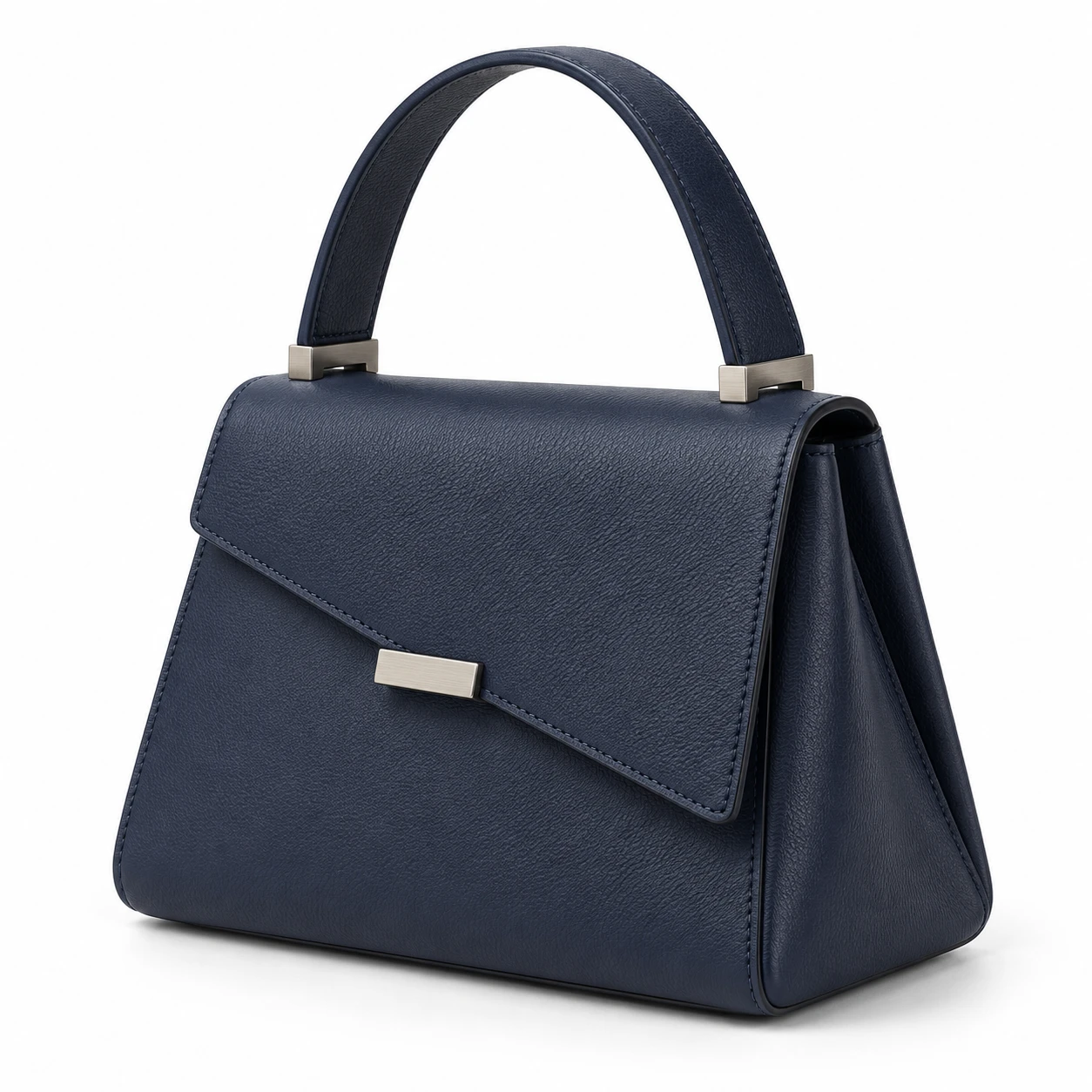
Aus einem einzelnen Produktfoto einen fotorealistischen Kampagnenfilm erzeugen, der die Produktidentität über Fertigungs-Makro, Materialdetail und Reveal hinweg beibehält. Genutztes Werkzeug: Higgsfield, Modell Seedance 2.5, Modus Omni-Reference, 20 Sekunden, 1080p, 16:9, mit Ton.
Für wen: Marken, Produktfotografen und Agenturen, die aus einem Produktfoto einen Kampagnenfilm erzeugen wollen.
- Zugang zu Higgsfield mit dem Modell Seedance 2.5 im Modus Omni-Reference
- Ein Produktfoto als Referenzbild, das Form, Material und Beschläge des Produkts eindeutig zeigt
- Guthaben an Higgsfield-Credits für den Videolauf
01 / CREATIVE DIRECTION
Create a photorealistic luxury fashion film from the supplied product reference. Follow the journey from raw midnight-navy leather to a finished structured top-handle handbag, ending with an effortless city styling moment. The visual language is tactile, precise and cinematic: authentic atelier craftsmanship, architectural leather construction and brushed silver hardware. Every shot must feel physically photographed.

02 / PRODUCT IDENTITY
Match the reference bag exactly. Preserve its structured trapezoid silhouette, wider base, narrower top, softly rounded lower corners and folded side gussets. Retain the asymmetric front flap with its diagonal lower edge, finely grained midnight-navy leather, tonal stitching and clean painted edges. Preserve the single broad arched leather top handle, its two rectangular brushed silver mounts and the small rectangular brushed silver clasp on the flap. Match their placement, proportions and orientation to the reference. Keep the handle length, flap geometry, stitching and hardware count consistent across every cut.

03 / MATERIAL STUDY
Resolve the fine natural leather grain, subtle pores and restrained satin sheen. The grain belongs to the leather surface and follows its folds and curvature. Show realistic leather thickness at cut edges and gentle compression where hands apply pressure. Edge paint remains clean and continuous. Tonal stitches follow the actual construction of the bag with consistent spacing. Brushed silver hardware has fine directional machining marks and soft, controlled reflections. Keep leather grain scale stable as focus and camera position change.

04 / SHOT SEQUENCE
OPEN on an extreme macro of an industrial leather-sewing machine needle stitching a midnight-navy leather panel. The presser foot advances the leather in small, physically accurate steps. CUT to a leather-cutting knife following a marked diagonal flap pattern on a cutting mat, revealing a clean edge. MOVE into a shallow-focus glide across the finished flap seam and painted edge. CUT to the rectangular brushed silver clasp, with a narrow highlight moving across its surface. REVEAL a rectangular handle mount and the broad leather handle curving upward from it. PULL BACK to the complete bag on a warm neutral plinth, matching the reference silhouette. FINISH with a woman dressed in black holding the bag by its top handle at her side inside a brushed stainless-steel elevator. Keep the front flap visible and the bag as the visual focal point.

05 / CAMERA & LENSES
Use a 100 mm macro look for the needle, leather grain, stitching, painted edges and metal details. Shift to an 85 mm product lens for the complete silhouette, then a 50 mm editorial lens for the elevator scene. Motion is controlled: slow lateral slides, short push-ins and deliberate focus pulls. Cut on hand movement and the diagonal line of the flap. Maintain natural perspective and realistic depth of field. Avoid exaggerated lens distortion or unstable camera drift.

06 / LIGHTING & COLOR
Shape the atelier scenes with soft directional window light and deep, clean shadows. Use broad, controlled highlights to reveal the leather grain and folded construction. Add narrow highlights to the brushed silver hardware while preserving its satin finish. Preserve the rich midnight-navy color; avoid crushed shadows, oversaturated blues or a black-looking bag. The product reveal uses a warm neutral surface against a subdued dark background. In the elevator, cooler overhead light and brushed-metal reflections create a contemporary editorial mood. Skin tones stay natural.

07 / MOTION & CONTINUITY
Hands apply credible pressure to the leather. The needle reciprocates vertically while the material feeds forward. The cutting blade stays in contact with the leather and follows the marked path. Hardware remains firmly attached. The broad handle carries the weight of the bag without stretching, twisting unnaturally or changing length. The structured body retains its shape, with only subtle natural movement at the gussets. During the final shot, the woman's fingers wrap naturally around the handle and the bag moves gently with her posture. Maintain consistent product identity, flap geometry, material scale and attachment points throughout.

08 / EDIT & SOUND
Build a concise, confident rhythm: tactile process details, brushed hardware, full product reveal, then the final styling moment. Use clean cuts and motivated transitions. Let sewing-machine clicks, subtle leather handling, the cutting blade passing through leather and restrained metal contact sounds support the imagery. Keep the final product readable before the film ends. Deliver crisp, natural motion and a refined fashion-campaign finish.

09 / QUALITY CONSTRAINTS
No denim, woven monogram, logos, letter charms, hangtags, chains or added shoulder straps. No extra handles, duplicated mounts, missing clasp, floating hardware or distorted bag silhouette. Do not alter the asymmetric flap or its diagonal edge. No melting leather, plastic-looking surfaces, crawling grain, oversmoothed textures, impossible reflections, warped hands or inconsistent stitching. Do not show the bag worn over the shoulder. Do not add titles, captions or new branding inside the generated footage. Preserve the supplied product design in every frame.
Eingabe: das Produktfoto einer Henkeltasche aus mitternachtsblauem Leder als Referenzbild, dazu dieser Prompt, unverändert. Ergebnis: ein 20 Sekunden langer Film mit Nähmaschinen-Makro auf dem blauen Leder, Lederschnitt, Beschlag-Detail, dem Produkt auf einem Sockel und einer Frau mit der Tasche im Aufzug. Das Startbild zeigt die Nähmaschinennadel auf dem Leder. Die Produktidentität blieb in den gesichteten Bildern gewahrt.
Der Testlauf stammt von der Redaktion, mit dem oben beschriebenen Ergebnis als Video, und wurde von Agent A nicht wiederholt. Der Lauf verbrauchte 180 abgerechnete Higgsfield-Credits; jeder weitere Lauf kostet erneut Credits. Der Prompt ist auf ein Produkt mit den beschriebenen Merkmalen zugeschnitten, Silhouette, Henkel, Beschlag. Bei einem anderen Produkt müssen Geometrie und Materialbeschreibung in den Abschnitten 02 und 03 angepasst werden. Ohne ein Referenzfoto, das Form und Beschläge klar zeigt, verliert das Werkzeug die Kontrolle über die Produktidentität.
Eigene Erstellung, Norman T. Leis, ALVA Institut.